
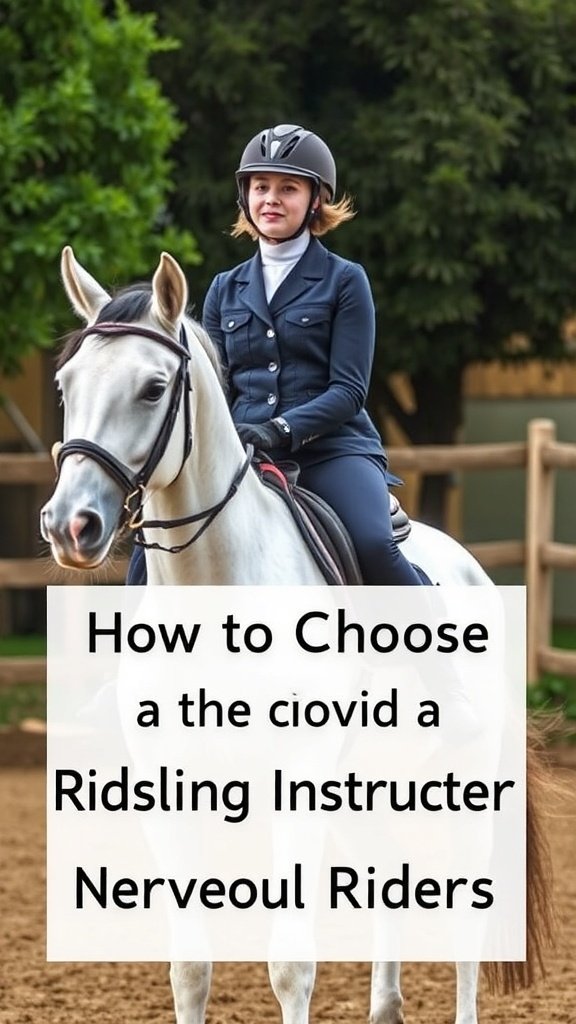
How to Choose a Riding Instructor for Nervous Riders
Choosing the right riding instructor can make all the difference, especially for nervous riders. Whether you’re new to riding or have had some setbacks, the right teacher can help you build confidence and skills. Here are some effective strategies to help you find an instructor who will meet your specific needs.
Consider Your Comfort Level
Before you begin searching, think about what makes you feel comfortable. Do you prefer a calm and gentle demeanor, or do you thrive on a more hands-on approach? Understanding your own preferences will guide you as you speak to potential instructors.

Look for Experience with Nervous Riders
Not all riding instructors are created equal. Some have extensive experience working with nervous riders. When you reach out to instructors, ask them directly about their experience in this area. A good instructor will know how to address your concerns and will have strategies to help you feel more at ease.
Check Their Communication Skills
Effective communication is crucial for building trust, especially for someone who may be feeling anxious. Pay attention to how the instructor explains concepts and whether they listen to your concerns. A great riding instructor will offer clear instructions and be patient while addressing any questions you may have.
Observe a Lesson
If possible, ask to observe a lesson or two before making a decision. This will give you insight into their teaching style and how they interact with students. Look for:
- A positive and supportive atmosphere
- How they encourage nervous riders
- Fellow students’ responses to the instructor
Watching a class in action can help you feel more comfortable with your choice.
Click Here to Explore All Things Equestrain, From Stables to Lessons and Free Ebooks
Ask About Their Training Methods
Riding instructors often have unique training methods. Discuss different techniques and philosophies with potential instructors. Some may focus on natural horsemanship or use gentle techniques, while others may be more traditional. Make sure their methods align with your comfort level and learning style.
Consider Their Qualifications
Also, take into account the qualifications of each instructor. Many will hold certifications from reputable riding organizations, which often indicates they have undergone professional training. Although qualifications are important, they should complement the personal rapport you feel. A highly qualified instructor may not necessarily be the best fit for you.
Evaluate Location and Facilities
Convenience matters. Make sure the riding school is easily accessible to you and has the facilities that match your needs. A safe, welcoming environment is crucial, especially when you are a nervous rider. Ensure the area is well-equipped and that the horses are well-cared-for and suitable for beginners or nervous riders.
Read Reviews and Testimonials
Do some research to gather information about each instructor’s reputation. Online reviews and testimonials can offer valuable insights into other riders’ experiences. Look for feedback specifically mentioning how instructors handle nervous riders and whether students felt supported and encouraged. Platforms like social media or community boards can be useful for gathering opinions.
Trial Lessons
Many riding schools offer trial lessons. These lessons allow you to experience the instructor’s approach without committing long-term. Use this opportunity to assess your comfort level and how well the instructor engages with you. Pay attention to whether you feel more at ease during the lesson and if you can ask questions freely.
Click Here to Explore All Things Equestrain, From Stables to Lessons and Free Ebooks
Trust Your Instincts
Above all, listen to your instincts. It’s important to feel a sense of trust and connection with your riding instructor. Even if someone has excellent qualifications, if you don’t feel comfortable, it might not be the right fit. Your emotional well-being is key to progressing as a rider, so take the time to find the instructor who makes you feel safe and encouraged.
Selecting the right riding instructor can set the foundation for a positive riding experience. By considering your own needs and preferences, along with the instructor’s experience and teaching style, you can make a choice that supports your journey toward building confidence and skill in the saddle.
The Importance of Building Trust Between Riders and Instructors
Building trust between riders and instructors is fundamental in the world of equestrian training, particularly for those with less experience or nerves. Establishing this trust creates a safe and encouraging environment where riders can thrive. Whether you are someone looking to learn or an instructor aiming to guide nervous riders, understanding the importance of this relationship is essential.
Trust plays a crucial role in allowing riders to feel secure. When a rider feels that their instructor genuinely cares about their well-being, they are more likely to open up about their fears and concerns. Here are some key components of trust that can substantially enhance the rider-instructor relationship:
- Communication: Open and honest communication is vital. As an instructor, it’s important to listen carefully to what the rider says and observe their body language. This helps in understanding their comfort levels better.
- Consistency: Consistency in teaching methods and expectations creates predictability. When instructors are reliable and stick to a routine, riders feel more secure, allowing them to focus on their riding without added anxiety about what might happen next.
- Empathy: Understanding the fears and anxieties of nervous riders can help instructors to be more patient and adaptive. Showing empathy fosters a sense of understanding, reducing the stress that riders often feel.
- Positivity: Reinforcing positive behavior is crucial. Acknowledging small victories can boost a rider’s confidence and strengthen trust in their instructor.
Establishing trust leads to an effective learning environment for nervous riders. Instructors who foster trust allow riders to take risks, face challenges, and gradually conquer anxiety. This can be particularly beneficial for riders who may have had a traumatic experience in the past. By providing support and encouragement, instructors can help these riders rebuild their confidence.
For nervous riders, the way an instructor communicates can significantly impact their experience. Here are a few techniques that can help improve communication:
Click Here to Explore All Things Equestrain, From Stables to Lessons and Free Ebooks
- Use Simple Language: Explaining riding techniques in clear, simple terms helps nervous riders grasp concepts without feeling overwhelmed.
- Ask Questions: Engaging riders in the conversation by asking how they feel or what they find challenging promotes a collaborative environment.
- Encourage Feedback: Invite riders to express their thoughts on what is working or not, enabling instructors to adapt their teaching styles accordingly.
The benefit of establishing trust transcends beyond the riding arena. It builds a community where riders can share experiences, tips, and successes. This can lead to long-lasting relationships that enhance both the rider’s experience and the instructor’s satisfaction. A solid connection between riders and instructors reduces anxiety and encourages ongoing development, making riding a lifelong journey of learning.
For instructors working with nervous riders, it’s essential to acknowledge and celebrate the smallest achievements. This could be as basic as sitting confidently in the saddle or achieving a correct position for the first time. By focusing on incremental progress, both the rider and instructor can build on successes and further deepen their trust.
The journey of learning to ride can be exposed to many challenges, especially for those who are a bit more apprehensive. Therefore, instructors should also be adaptable, adjusting lessons to fit the individual needs of each rider. Whether a lesson focuses on groundwork or riding techniques, tailoring sessions to match the rider’s comfort level is essential.
Ensuring a calm and respectful atmosphere in the lesson is vital. A supportive environment gives nervous riders the confidence to try new things and express their feelings. A rider who feels respected is more likely to trust their instructor, which creates a positive feedback loop that benefits both parties.
Building trust between riders and instructors is not simply an added bonus; it forms the very foundation of effective equestrian education. As instructors cultivate this trust, nervous riders will feel empowered to brave new challenges, enabling them to discover the joy and thrill of riding.
Techniques to Calm Nervous Riders Before Lessons
For many beginners, the thought of riding a horse can be overwhelming. When riders feel nervous before lessons, it often affects their confidence and performance. Whether you’re a riding instructor or a supportive friend, there are techniques you can use to help calm nervous riders before and during their lessons.
Click Here to Explore All Things Equestrain, From Stables to Lessons and Free Ebooks
Build a Comfortable Environment
Creating a calm and welcoming atmosphere is crucial for nervous riders. Here are some steps to establish this environment:
- Choose a quiet time for lessons when the facility is less crowded.
- Maintain a clean and organized space where distractions are minimized.
- Use soothing colors and gentle decor to promote relaxation.
Establish a Connection
Building rapport with nervous riders can ease their anxiety. Consider these methods:
- Take time to get to know the rider personally. Ask questions about their previous experiences with horses.
- Share your own experiences, including any fears you faced when starting out.
- Allow the rider to express their feelings and concerns openly without judgment.
Implement Breathing Exercises
Deep breathing can significantly help reduce anxiety. Teach riders simple techniques such as:
- Inhale slowly through the nose for a count of four.
- Hold the breath for a count of four.
- Exhale gently through the mouth for a count of six.
- Repeat this process several times before beginning the lesson to help them relax.
Introduce the Horse Gradually
Nervous riders may feel apprehensive about the horse they’re about to ride. Gradually introducing them to the horse can alleviate this fear:
- Start with ground work. Allow the rider to walk around the horse and get to know its personality.
- Encourage them to groom the horse, which can create a bond and foster trust.
- Allow the rider to feed treats to the horse from their hand, reinforcing positive interactions.
Outline Expectations and Goals
Setting clear expectations before lessons can help nervous riders feel more at ease. Discuss the following:
Click Here to Explore All Things Equestrain, From Stables to Lessons and Free Ebooks
- Explain what skills will be covered in the lesson.
- Set achievable goals that are tailored to the rider’s abilities.
- Reassure them that it’s okay to take their time and that progress may be gradual.
Use Positive Reinforcement
Encouragement can work wonders in building confidence. Use positive reinforcement techniques such as:
- Compliment their efforts and small achievements during lessons.
- Celebrate milestones, no matter how small, to keep their motivation high.
- Share stories of past students who overcame nervousness, creating a sense of hope and possibility.
Incorporate Visualization Techniques
Visualization can help riders picture themselves successfully riding. Guide them through this process:
- Encourage them to close their eyes and visualize a successful ride.
- Ask them to imagine feeling confident and calm, focusing on the sensations of riding.
- Practice this visualization before lessons to reinforce a positive mindset.
Tailor the Lesson Structure
Adapting your teaching methods to suit the nervous rider can make a big difference:
- Start with groundwork to boost their confidence, moving to riding when they’re ready.
- Maintain a slow pace and avoid overwhelming them with too many new concepts at once.
- Build on their success gradually, ensuring they feel accomplished after each lesson.
Encourage Open Communication
Reassure nervous riders that they can communicate their needs throughout the lesson:
- Encourage them to ask questions whenever they’re unsure about something.
- Invite feedback on their comfort level during activities, adjusting as necessary.
- Let them know that it’s okay to take a break if they start to feel anxious.
By implementing these techniques, instructors can create a positive, supportive environment for nervous riders. Remember, everyone has their own pace, and patience is key. Helping riders build confidence will not only enhance their skills but also enrich their love for riding.
Understanding Different Teaching Styles in Riding Instruction
When it comes to riding instruction, understanding the different teaching styles available can significantly enhance your learning experience. Whether you are a beginner or an experienced rider, knowing how an instructor teaches can help you feel more comfortable and engaged while learning. Here are some common teaching styles you might encounter, which can guide you in choosing the right riding instructor.
Click Here to Explore All Things Equestrain, From Stables to Lessons and Free Ebooks
1. The Demonstrator
This teaching style is visual and often involves the instructor showing the movements or techniques you need to learn. Demonstrators will ride alongside you, providing clear examples of how to perform tasks. This method can be especially beneficial for visual learners who grasp concepts more easily when they see them in action.
2. The Communicator
Communicators excel in breaking down complex movements into understandable steps and verbally guiding you through each phase. They rely on descriptive language, imagery, and analogies to convey their points, making the learning experience more relatable. This style works well if you appreciate clear instructions and enjoy asking questions to deepen your understanding.
3. The Facilitator
Facilitators take an engaging approach by encouraging students to discover solutions independently. They may ask you questions that lead you to think critically about your riding techniques. This style is effective for learners who thrive on personal experience and self-correction, allowing you to build your confidence and develop decision-making skills in the saddle.
4. The Coach
Coaching emphasizes encouragement, motivation, and skill development. Coaches are typically energetic and focus on setting goals for their students while fostering a competitive spirit. If you enjoy an energetic environment and thrive under pressure, this teaching style may resonate well with you, pushing you to improve your abilities rapidly.
5. The Nurturer
This caring style is especially beneficial for nervous riders, providing a supportive atmosphere where you can openly express your fears and concerns. Nurturers patiently work with you, taking the time to build trust and confidence. If you find yourself anxious about riding, seeking an instructor with a nurturing approach can help ease your nerves.
Click Here to Explore All Things Equestrain, From Stables to Lessons and Free Ebooks
6. The Specialist
Specialists focus on specific disciplines, such as dressage, show jumping, or trail riding. If you have a particular goal in mind or want to excel in a certain area, look for an instructor who specializes in that discipline. Understanding their teaching style can give you deeper insights into the technical aspects you need to master, helping you advance in your chosen field.
Evaluating the Right Fit
Now that you’re aware of various teaching styles, how do you choose an instructor that aligns with your needs? Start with these steps:
- Assess Your Learning Style: Are you a visual learner, or do you prefer verbal instructions? Identifying your learning style will help narrow down your options.
- Schedule an Introductory Lesson: Many instructors offer trial lessons. Use this opportunity to gauge how their teaching style aligns with your comfort level.
- Ask Questions: Don’t hesitate to ask prospective instructors about their teaching methods. This can provide insight into their approach and whether they can meet your needs.
- Consider Experience: An instructor’s experience with nervous riders is crucial. Seek someone who is patient and has successfully helped students with similar concerns.
- Seek Recommendations: Speak to other riders or equine professionals. Firsthand experiences can give you valuable insights into an instructor’s style and effectiveness.
Building a Positive Relationship
Remember that the instructor-student relationship plays a key role in your learning process. Having open communication and mutual respect can lead to a more enjoyable and productive riding experience. Don’t be afraid to express your preferences and goals; a great instructor will adapt their style to help you succeed.
Choosing the right riding instructor is essential for your growth as an equestrian. By understanding different teaching styles and determining what resonates with you, you can find the perfect match. This not only helps to enhance your riding skills but also builds confidence and excitement for your journey in the saddle.
Setting Realistic Goals for Nervous Riders in Equine Training
When it comes to equine training, setting realistic goals is vital, especially for nervous riders. Nervousness can stem from past experiences, fear of injury, or simply the overwhelming size and power of horses. Establishing achievable goals not only builds confidence but also fosters a positive learning environment. Here are some strategies to help navigate this process effectively.
Understanding Your Personal Goals
Before starting any training, take time to understand what you want to achieve. Ask yourself the following questions:
Click Here to Explore All Things Equestrain, From Stables to Lessons and Free Ebooks
- What specific skills do I want to develop?
- Am I hoping to build trust with my horse or improve my riding technique?
- Do I want to partake in shows or simply ride for enjoyment?
By determining your personal goals, you can aim for objectives that are not only realistic but also tailored to your needs. This helps in creating a path toward success while minimizing anxiety.
Start Small and Build Gradually
Setting smaller, achievable goals is key to gaining confidence. Instead of jumping into complex riding maneuvers, focus on foundational skills. Consider these mini-goals:
- Getting comfortable grooming your horse.
- Walking confidently around the arena.
- Learning to mount and dismount safely.
- Practicing simple commands like stopping and turning.
As you achieve these goals, incrementally increase the difficulty. This gradual approach reduces anxiety and builds trust between you and your horse.
Choose the Right Instructor
Finding a riding instructor who understands nervous riders can change everything. Look for someone who:
- Has experience working with anxious riders.
- Uses positive reinforcement techniques.
- Can customize lessons to fit your pace.
A great instructor will not only teach you riding skills but also help you manage your nerves through encouragement and patience. Make sure you feel comfortable with them and open to communicate any specific fears or concerns.
Click Here to Explore All Things Equestrain, From Stables to Lessons and Free Ebooks
Include Breathing Techniques and Mindfulness
Nervous riders often benefit from learning relaxation techniques. breathing exercises into your routine can make a significant difference. Try these simple techniques:
- Take deep breaths before riding.
- Focus on exhaling slowly to release tension.
- Visualize a successful riding session while you breathe.
Mindfulness practices, such as staying present in the moment, can also alleviate anxiety. By focusing on your surroundings and the rhythm of your horse, you can enjoy the experience rather than worry about potential challenges.
Track Your Progress
Keeping a journal or log of your training can be incredibly beneficial. Write down:
- Your goals and what you’d like to achieve at each lesson.
- What went well after each ride.
- What you found challenging.
Tracking your progress not only helps you celebrate small victories but also provides insight into areas needing more focus. You’ll slowly begin to see how far you’ve come and how much more you can achieve, reinforcing your growing confidence.
Set a Support System
Have a support system in place as you journey through your equine training. Whether it’s friends, family, or fellow riders, sharing your experiences can ease anxiety. They can provide encouragement, motivation, and even camaraderie during lessons. Joining supportive communities, both online and in-person, can also help you connect with others who share similar experiences.
Click Here to Explore All Things Equestrain, From Stables to Lessons and Free Ebooks
Know that It’s Okay to Take Breaks
Remember that it’s okay to take breaks if you’re feeling overwhelmed. Listen to your body and mind. If you need time to regroup, that’s perfectly fine. Riding is a journey, and everyone moves at their own pace. Taking time to recharge can ultimately lead to more productive training sessions.
By setting realistic goals, choosing the right support, and celebrating small achievements, you can transform your equine experience from one of fear to one of joy. Embrace the journey, and over time, you will become a more confident and competent rider.
Conclusion
Choosing the right riding instructor for nervous riders is crucial to fostering a positive and engaging learning environment. It’s essential to build trust between the rider and instructor, as this bond encourages open communication and creates a safe space for the rider to express their fears. Look for an instructor who prioritizes patience and understanding, putting nervous riders at ease with their calm demeanor.
Before lessons begin, techniques to calm nervous riders can include guided breathing exercises or small, manageable sessions that gradually introduce them to the horse and equipment. These strategies can help ease anxiety, making the experience more enjoyable and productive. Additionally, understanding different teaching styles is key; some instructors may be more hands-on, while others offer a more theoretical approach. Finding a style that resonates with the nervous rider can significantly enhance their learning.
Setting realistic goals is another fundamental aspect of effective riding instruction. For nervous riders, small, attainable targets can build confidence and celebrate progress. Whether it’s mastering a specific movement or simply feeling comfortable in the saddle, these goals keep the rider motivated and focused.
Ultimately, choosing a riding instructor is about finding someone who aligns with the rider’s needs and comfort levels. By considering trust, calming techniques, teaching styles, and goal-setting, you can provide support that encourages nervous riders to flourish in their equine journey. Each lesson is a step forward, and the right instructor can make all the difference in creating a positive riding experience.
Click Here to Explore All Things Equestrain, From Stables to Lessons and Free Ebooks